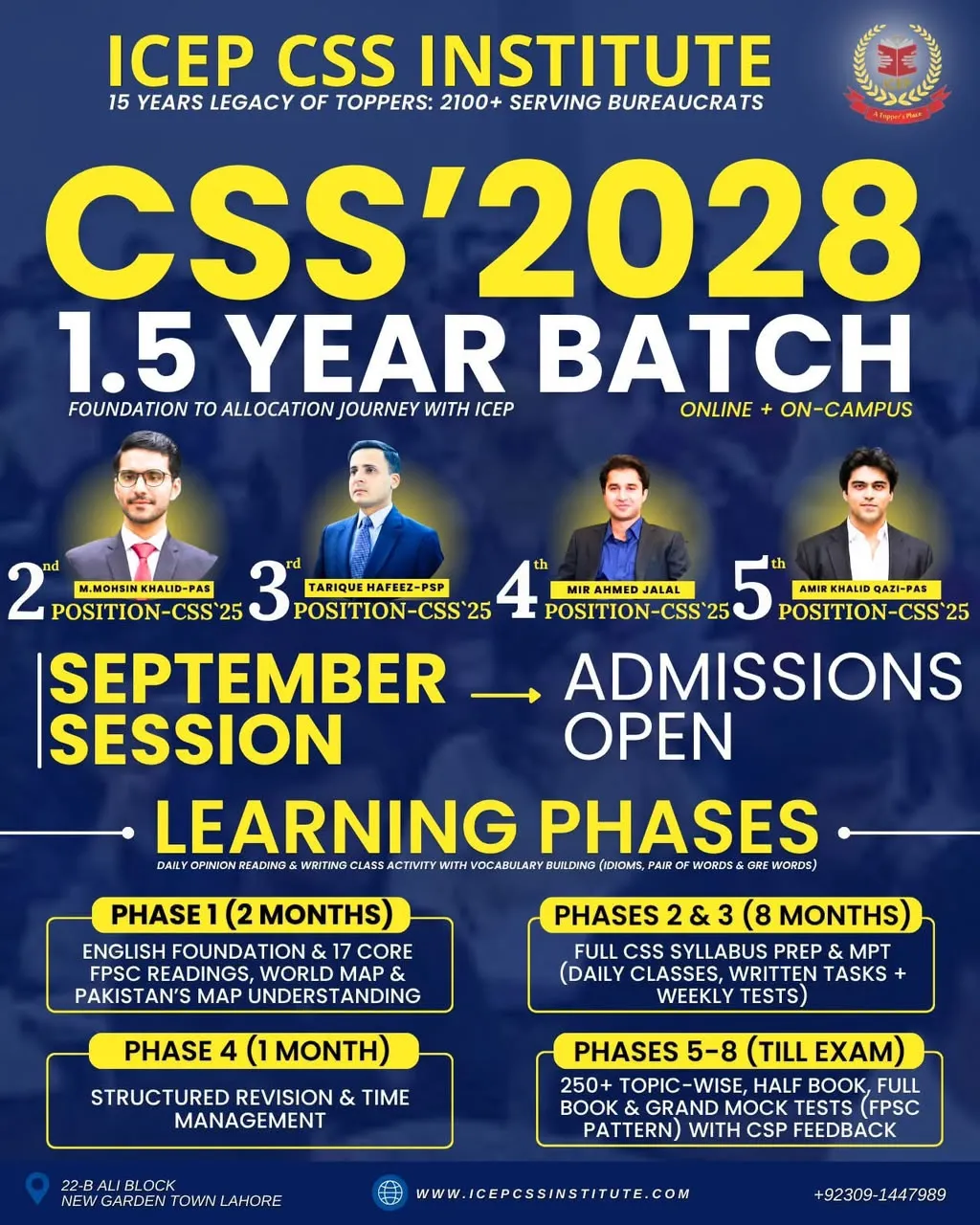

ICEP CSS Institute teaches newspaper reading and note-making for Current Affairs and Pakistan Affairs. Sir Usama Yasin, a PMS qualifier, mentors both papers at the Lahore campus. Current Affairs and Pakistan Affairs are both 100-mark compulsory papers, and their syllabi overlap on several major topics. One structured note-making system, organized by theme rather than by date, prepares a candidate for both papers together. This guide shows how to build CSS Current Affairs notes that still make sense months later. It covers sources, a folder method, and a weekly revision cycle.
Why Current Affairs and Pakistan Affairs Share One Note-Making System
A separate ICEP guide compares the two papers directly and shows where their syllabi overlap. Topics such as the Kashmir issue, the Palestine issue, and Pakistan’s relations with its neighbors appear in both papers. A single news item on any of these topics can serve two papers if it is filed correctly. Filing it under the wrong system, or not filing it at all, wastes the overlap and forces double the reading.
Choosing Sources: What to Read Every Day
Most CSS aspirants build their preparation on one or two English-language dailies. Reading the same source daily matters more than reading many sources occasionally. A consistent source lets you track how a story develops over weeks, which matters for both papers.
Editorial and opinion pages matter as much as the news pages. Current Affairs and Pakistan Affairs both reward analysis over recall. For verified figures on the economy or trade, government publications are more reliable than newspaper summaries. The Pakistan Economic Survey and State Bank of Pakistan reports are two examples worth checking each year.
The Note-Making Method: Theme Folders Instead of Daily Logs
A daily log records news in the order it happened; a theme folder groups news by subject regardless of date. FPSC’s papers ask analytical questions built around themes, not chronology. Theme folders match how the exam is actually structured.
A practical starting set looks like this:
- Foreign Policy and International Relations
- Economy and Governance
- Environment and Climate
- Constitutional and Judicial Affairs
- Science, Technology, and Social Policy
Each folder holds every relevant item, regardless of when it appeared. A candidate revising Foreign Policy in December can then see August’s developments next to November’s, in one place.
A single note entry needs four elements to stay useful months later. Record the date, the source, and a two- or three-line summary in your own words. Add one line on how the topic could appear as an exam question. Copying full newspaper paragraphs defeats the purpose. Write the summary from memory after reading, in your own words.
Weekly and Monthly Revision Cycle
Daily notes without a revision cycle become a pile of disconnected facts by exam time. A weekly review means re-reading each folder once and merging repeated stories into a single, updated entry. A monthly review means writing a one-paragraph summary of each folder’s biggest development. That summary becomes usable material for essay and answer-writing practice later.
Sir Usama Yasin mentors Current Affairs, Pakistan Affairs, and Essay at ICEP. His sessions cover how to convert this kind of folder system into exam-ready answers.
Built for Working Professionals and Repeat Aspirants
Working professionals rarely have two hours a day for newspaper reading. A theme-folder system lets a thirty-minute daily read still count. Each entry has a fixed place, so nothing needs re-sorting later.
Repeat aspirants often know more than fresh graduates but keep it scattered. Rebuilding that knowledge into theme folders turns scattered recall into structured, examinable material.
Start Building Your Notes at ICEP
A note-making system only works if it is practiced before exam pressure sets in. ICEP builds this method into its Current Affairs and Pakistan Affairs sessions. It runs as part of both the CSS Annual Plan and the CSS Prime Session. For current batch timings, call or WhatsApp ICEP CSS Institute at +92 309 1447989. The campus is at 22-B New, Ali Block New Garden Town, Lahore, Opposite Barkat Market.
Frequently Asked Questions
Which newspaper is best for CSS Current Affairs and Pakistan Affairs preparation?
One consistent English-language daily, read every day, works better than switching between several papers. Editorial and opinion sections matter as much as the news pages for both papers. Government publications such as the Pakistan Economic Survey fill gaps that daily papers cover only briefly.
How long should note-making take each day?
Thirty minutes of focused reading and note-making is enough once the theme-folder system is set up. The time is spent filing one or two entries, not reading the entire newspaper cover to cover. Working professionals can compress this into a single evening review of the day’s headlines.
What is the difference between notes for Current Affairs and notes for Pakistan Affairs?
Current Affairs focuses on global and regional developments, while Pakistan Affairs focuses on domestic history, politics, and policy. Several topics, such as the Kashmir issue, appear in both syllabi, which is why a shared folder system works.
Should I make notes by hand or digitally?
Either format works if entries stay organized by theme and stay short enough to revise quickly. Handwritten notes help recall during the written exam, while digital notes are faster to search and update. Many aspirants keep digital folders for monthly summaries and handwritten cards for final revision.
Does ICEP teach this note-making method as part of its courses?
Yes, Sir Usama Yasin covers newspaper reading and note-making as part of Current Affairs and Pakistan Affairs sessions at ICEP. The method is built into both the CSS Annual Plan and the CSS Prime Session. Call +92 309 1447989 to confirm current batch timings for these sessions.